
You switch on your AC expecting cool and comfortable air, but instead, you hear a strange sound coming from the unit.
Maybe it’s a buzzing noise.
Maybe it’s a rattling sound.
Or perhaps it sounds like something is vibrating inside.
Most homeowners ignore these noises initially because the AC is still cooling. However, unusual sounds are often the first warning sign that something inside the system needs attention.
Just like a car makes certain sounds before developing a major problem, your air conditioner also gives early signals when components begin to wear out or malfunction.
The good news is that not every noise means an expensive repair. Some sounds are completely normal, while others require immediate inspection.
In this guide, we’ll explain the most common AC Noise Problems, what they usually indicate, and when it’s time to call a technician.
Is It Normal for an AC to Make Noise?
Every air conditioner produces some level of sound during operation.
Normal sounds include:
- Airflow from vents
- Soft fan movement
- Mild compressor startup sound
- Water movement inside drain systems
These sounds are part of normal operation.
The problem begins when you notice:
- New sounds
- Louder sounds
- Continuous noise
- Sudden changes in operation
Whenever the sound pattern changes, it’s worth investigating.
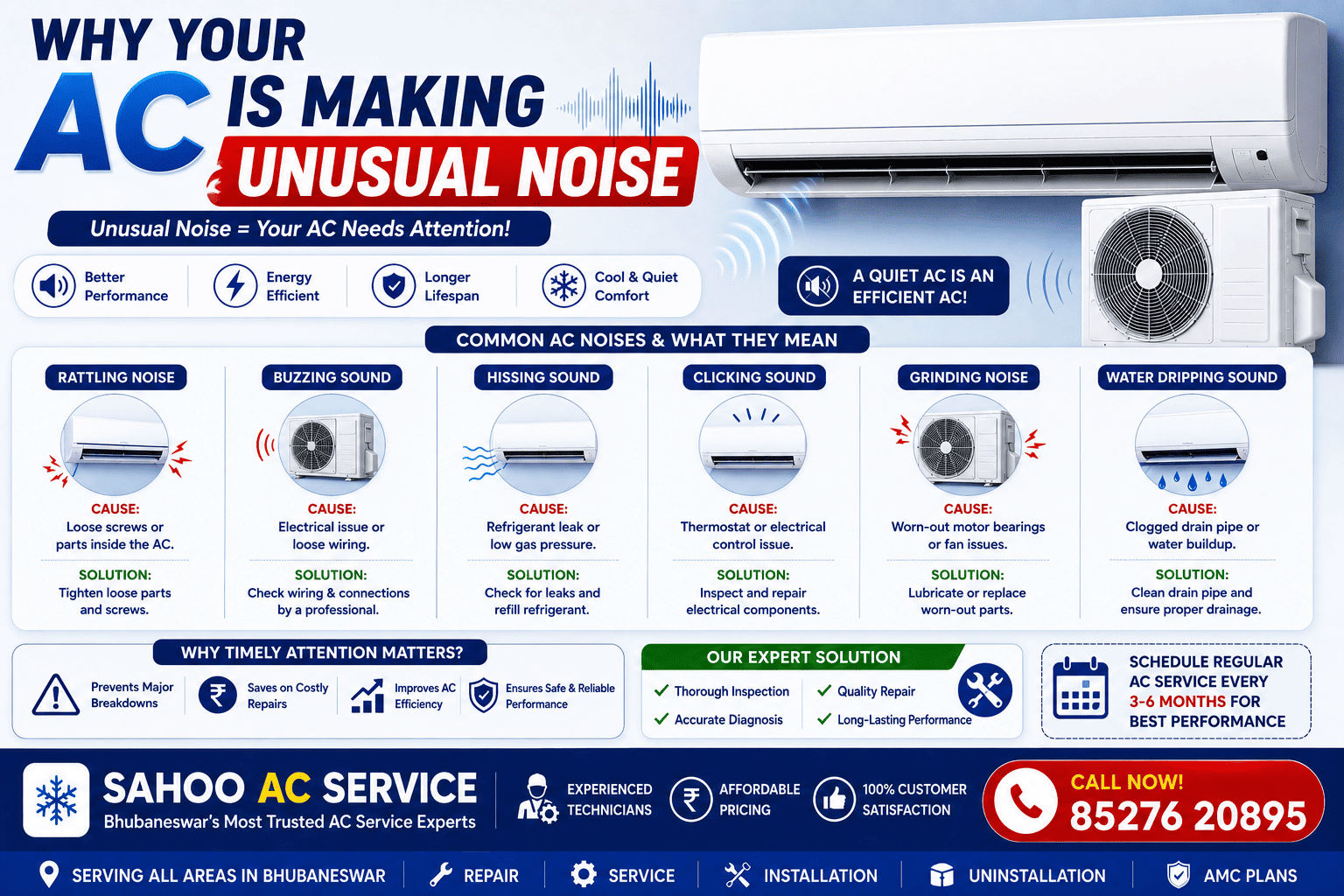
1. Buzzing Sound Coming from the AC
A buzzing sound is one of the most common complaints among AC owners.
Sometimes it occurs briefly during startup, but continuous buzzing may indicate a problem.
Possible Causes
- Loose electrical connections
- Faulty capacitor
- Compressor issues
- Vibrating components
- Dirt accumulation
What You Should Do
If the buzzing becomes louder over time or occurs continuously, schedule a professional inspection.
Electrical issues should never be ignored.
2. Rattling Noise Inside the Unit
Rattling sounds usually indicate something has become loose.
This is common in AC systems that have been operating for several years.
Common Reasons
- Loose screws
- Vibrating panels
- Damaged mounting brackets
- Debris inside outdoor unit
Why It Matters
A small loose component can eventually damage nearby parts if left unattended.
Early tightening and adjustment can prevent larger repairs later.
3. Clicking Sound During Operation
A single click during startup or shutdown is generally normal.
However, repeated clicking may indicate a problem.
Possible Causes
- Faulty relay
- Electrical control issues
- Thermostat malfunction
- PCB-related problems
When to Worry
If the AC struggles to start while producing repeated clicking sounds, professional diagnosis is recommended.
4. Hissing Sound Near Copper Pipes
A hissing sound should never be ignored.
In many cases, it indicates refrigerant leakage.
Common Symptoms
- Hissing noise
- Reduced cooling
- Ice formation
- Longer cooling cycles
Why It’s Important
Low refrigerant affects cooling performance and may eventually damage the compressor.
A technician should inspect the system immediately.
5. Gurgling or Water Flow Sound
Many homeowners become concerned when they hear water-like sounds inside the AC.
In some situations, this is completely normal.
The sound may be caused by:
- Condensation drainage
- Refrigerant movement
However, excessive gurgling combined with poor cooling may indicate drainage or refrigerant issues.
What to Check
Look for:
- Water leakage
- Reduced cooling
- Drainage blockage
If these symptoms appear together, servicing is recommended.
6. Grinding Noise from the AC
Grinding sounds usually indicate mechanical wear.
This is one of the more serious AC noises.
Potential Causes
- Fan motor problems
- Bearing wear
- Internal component damage
Why Immediate Attention Is Needed
Mechanical parts can deteriorate rapidly once grinding begins.
Ignoring the problem may result in expensive component replacement.
7. Whistling Sound During Cooling
A whistling sound often indicates airflow restrictions.
Possible Reasons
- Dirty filters
- Blocked vents
- Air leaks
- Duct issues (for centralized systems)
Simple Solution
Check and clean air filters first.
If the noise persists, professional inspection may be necessary.
8. Vibrating Outdoor Unit
Many outdoor units produce vibration, but excessive vibration is not normal.
Common Causes
- Uneven installation surface
- Loose mounting bolts
- Compressor imbalance
Risks
Continuous vibration can damage internal components over time.
Proper adjustment usually resolves the issue.
9. Loud Compressor Noise
The compressor is the heart of your air conditioner.
While compressors naturally produce sound, excessive noise often signals trouble.
Warning Signs
- Loud humming
- Metal knocking
- Continuous vibration
- Reduced cooling
Possible Causes
- Aging compressor
- Refrigerant issues
- Internal mechanical wear
Compressor problems should always be evaluated by experienced technicians.
Why AC Noise Problems Become Worse Over Time
Many unusual sounds start small.
Homeowners often delay servicing because:
- Cooling still works
- Noise seems minor
- The issue appears temporary
Unfortunately, small mechanical or electrical issues often become larger and more expensive over time.
Early inspection usually reduces repair costs.
Simple Checks You Can Perform Yourself
Before calling a technician, you can perform a few basic checks.
Clean the Air Filters
Dirty filters often cause airflow-related noises.
Inspect Visible Panels
Check for loose screws or panels.
Remove Outdoor Debris
Leaves and debris may create vibration or rattling sounds.
Check Remote Settings
Certain operational modes can temporarily alter sound levels.
If noise continues after these checks, professional inspection is recommended.
When Should You Call an AC Technician?
Professional assistance is necessary if:
✔ Noise becomes louder over time
✔ Cooling performance decreases
✔ Water leakage appears
✔ Ice forms on coils
✔ Electrical smells occur
✔ Compressor sounds become excessive
✔ The AC struggles to start
Ignoring these symptoms can increase repair costs significantly.
How Regular Maintenance Prevents Noise Problems
Routine servicing helps identify wear before major damage occurs.
Professional maintenance includes:
- Fan inspection
- Motor inspection
- Electrical testing
- Component tightening
- Cleaning of internal parts
Regular servicing improves reliability and reduces unexpected breakdowns.
What Most Homeowners Get Wrong
Many people assume:
“If the AC is cooling, the noise isn’t important.”
This is often a mistake.
An AC may continue cooling even while internal components are developing problems.
Strange sounds are often early warning signals that help prevent larger failures.
Listening to those signals can save significant money in the long run.
Need Help with an AC Noise Problem?
If your AC is producing unusual sounds, don’t wait until cooling performance is affected.
Our technicians can inspect:
✔ Compressor issues
✔ Fan motor problems
✔ Refrigerant leaks
✔ Electrical faults
✔ Vibration problems
✔ Indoor and outdoor unit components
📞 Call Now: +91 85276 20895
🌐 Book Online:
https://sahooacservice.com/contact-us/
Final Thoughts
Unusual AC sounds are more than just an annoyance. They often provide valuable clues about the health of your cooling system.
Whether it’s buzzing, rattling, clicking, hissing, grinding, or vibration, understanding what these noises mean can help you take action before a minor issue becomes a major repair.
Regular maintenance, prompt inspections, and professional servicing are the best ways to keep your AC running quietly, efficiently, and reliably throughout the year.
Instead of ignoring strange sounds, treat them as an opportunity to identify problems early and protect your investment.
Our Service Areas
AC Repair in Bhubaneswar
Patia | Rasulgarh | Khandagiri | Old Town | Chandrasekharpur | Jaydev Vihar | Nayapalli | Saheed Nagar | Acharya Vihar | Vani Vihar
AC Repair in Cuttack
CDA Sector 6, 7, 9, 10 | Badambadi | Buxi Bazaar | College Square | Link Road | Tulsipur | Choudwar
AC Repair in Kendrapara
Kendrapara Town | Baniamal | Patkura | Marshaghai | Aul | Derabish | Rajkanika | Mahakalapada | Rajnagar | Garadpur | Pattamundai | Nikirai | Batipada | Narasinghpur | Tinimuhani