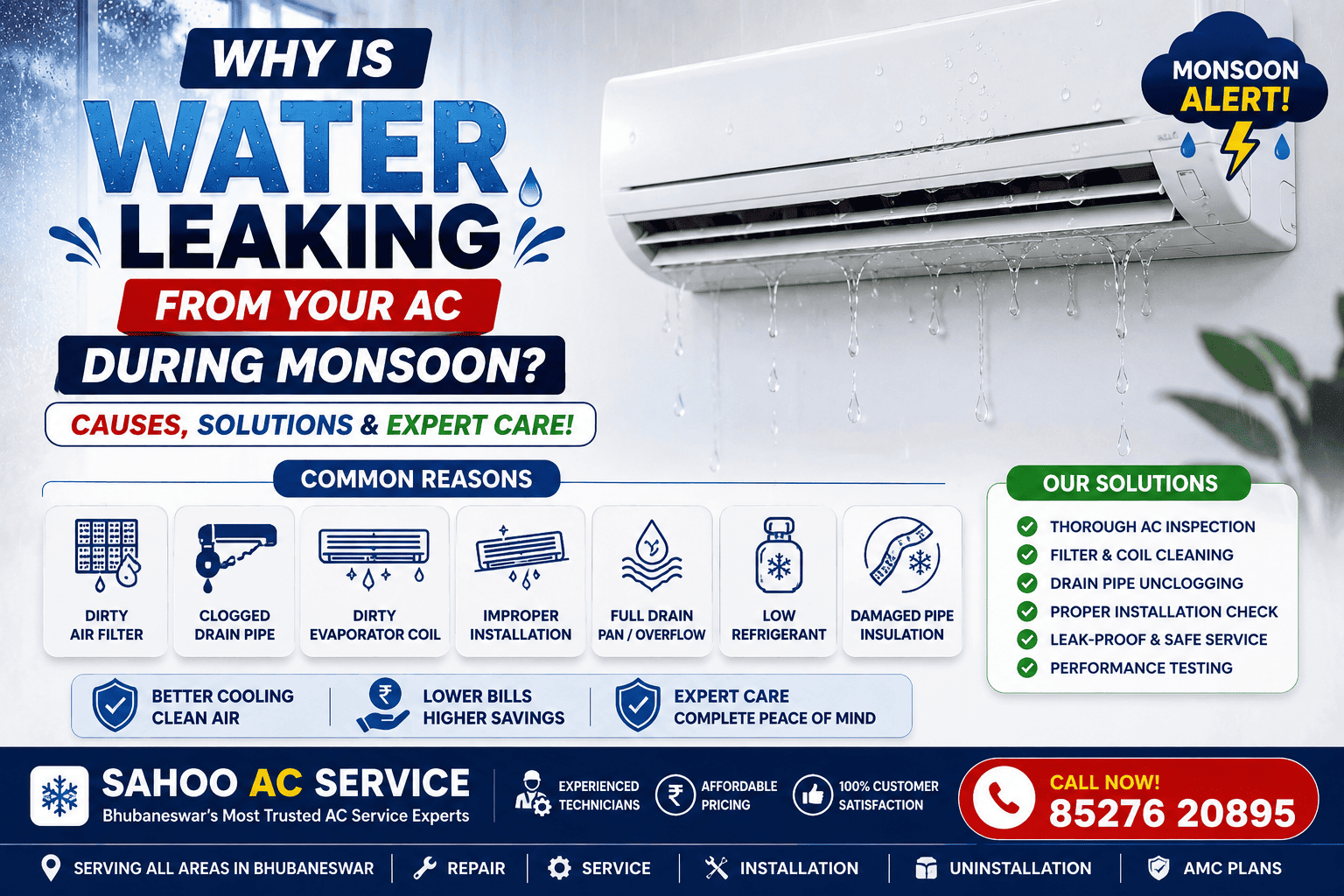
When the monsoon season arrives, many homeowners start noticing a common air conditioner problem—water dripping from the indoor unit. At first, it may look like a minor issue, but if ignored, AC water leakage can damage walls, furniture, electrical fittings, and even reduce the lifespan of your air conditioner.
Many people assume that rainwater is somehow entering the AC system, but in most cases, the actual cause is related to drainage problems, poor maintenance, or excessive moisture in the air.
In this guide, we’ll explain why water leakage becomes more common during monsoon, the major reasons behind the issue, and how professional AC Water Leakage Repair can prevent bigger problems in the future.
Why AC Leakage Increases During Monsoon
During the rainy season, humidity levels rise significantly. Air conditioners work harder to remove moisture from indoor air, producing more condensation than usual.
Normally, this water flows through the drain pipe and exits safely outside. However, if the drainage system is blocked or damaged, the excess water starts overflowing from the indoor unit.
That’s why many AC owners experience leakage issues specifically during monsoon months.
Signs That Your AC Has a Leakage Problem
Before discussing the causes, it’s important to identify early warning signs.
Common symptoms include:
- Water dripping from the indoor unit
- Wet patches on nearby walls
- Water collecting below the AC
- Musty smell inside the room
- Reduced cooling performance
- Unusual gurgling sounds
If you notice any of these signs, it’s best to inspect the system before the problem worsens.
1. Blocked Drain Pipe
A clogged drain pipe is one of the most common reasons behind water leakage.
Over time, dust, dirt, algae, and debris accumulate inside the drainage line. During monsoon, the increased moisture accelerates this buildup.
As a result, water cannot flow outside properly and starts overflowing from the indoor unit.
Solution
Professional cleaning of the drain pipe helps restore proper water flow and prevents leakage.
2. Dirty Air Filters
Air filters play an important role in maintaining airflow inside the AC.
When filters become clogged with dust:
- Airflow becomes restricted
- Evaporator coils become excessively cold
- Ice starts forming on coils
When the ice melts, excess water may overflow and leak from the unit.
Solution
Regular filter cleaning improves airflow and reduces the chances of water leakage.
3. Frozen Evaporator Coils
Frozen coils are another major cause of indoor water leakage.
This usually happens because of:
- Dirty filters
- Low refrigerant levels
- Airflow restrictions
When frozen coils thaw, a large amount of water is produced quickly, which can overwhelm the drainage system.
Solution
Professional inspection is required to identify the root cause and restore normal cooling operation.
4. Improper AC Installation
Many leakage problems originate from incorrect installation.
If the indoor unit is not mounted with the proper slope, condensed water may not reach the drain outlet correctly.
Instead, water starts collecting inside the unit and eventually leaks into the room.
Solution
A technician can adjust the installation angle and ensure proper drainage.
5. Damaged or Disconnected Drain Pipe
In some cases, the drain pipe itself may develop cracks or become disconnected.
This is common in older AC systems or after relocation and reinstallation.
Even if the drainage system is clean, water can leak through damaged sections of the pipe.
Solution
The damaged drain line should be repaired or replaced immediately.
6. Excessive Humidity During Rainy Season
Monsoon weather creates extremely humid conditions.
Your AC removes large quantities of moisture from indoor air every day.
When humidity levels remain very high for long periods:
- Condensation increases
- Drainage load becomes higher
- Existing drainage weaknesses become visible
This is why some AC units leak only during monsoon despite working normally during summer.
Solution
Regular servicing before the rainy season helps prepare the system for increased moisture levels.
7. Low Refrigerant Levels
Many homeowners are surprised to learn that refrigerant issues can also cause leakage.
When refrigerant levels become low:
- Coil temperature drops excessively
- Ice forms on evaporator coils
- Melted ice creates excess water
This additional water often leads to leakage.
Solution
Leak detection and refrigerant correction should be performed by qualified technicians.
Why You Should Never Ignore Water Leakage
A leaking AC may seem harmless initially, but prolonged leakage can create serious problems.
Potential consequences include:
Wall Damage
Continuous dripping can weaken paint and plaster.
Mold Growth
Moisture creates ideal conditions for mold and fungus.
Electrical Risks
Water near wiring and electrical components increases safety hazards.
Reduced Cooling Efficiency
Underlying issues affecting drainage often impact cooling performance too.
Higher Repair Costs
Small drainage problems can turn into expensive component failures if ignored.
Monsoon AC Maintenance Tips
Preventive maintenance is the best way to avoid leakage issues.
Clean Filters Every Month
Clean filters improve airflow and reduce coil freezing.
Check Drain Pipe Regularly
Ensure water flows freely through the drainage line.
Schedule Professional Servicing
Routine servicing helps identify hidden problems early.
Inspect for Unusual Moisture
Any signs of dripping should be checked immediately.
Keep Outdoor Unit Clean
Proper airflow improves overall AC performance.
When Should You Call an AC Technician?
Professional help is recommended if:
- Leakage continues after filter cleaning
- Water drips frequently from indoor unit
- Cooling performance decreases
- Ice forms on coils
- Drain pipe appears blocked
- Leakage returns repeatedly
An experienced technician can identify the exact cause and provide long-term solutions instead of temporary fixes.
Final Thoughts
Water leakage from an air conditioner is one of the most common problems during monsoon, but it should never be ignored. Whether the issue is caused by a blocked drain pipe, dirty filters, frozen coils, installation errors, or excessive humidity, early diagnosis can prevent costly repairs later.
Regular maintenance, timely cleaning, and professional inspections help keep your AC running efficiently throughout the rainy season.
If you notice water dripping from your indoor unit, addressing the issue early will save money, improve cooling performance, and protect your home from moisture-related damage.